“My profession is dressing stories”: the journey of Isbella Brasileiro
Before sewing costumes, Isbella sewed presences.
As a girl, it was the body in motion that took her to the stage: ballet and contemporary dance showed her the power of dressed images. There, costume was not just fabric. It was gesture, it was emotion, it was language. And, perhaps without knowing it, she already sensed what would become her profession, her research and her mission: dressing stories to give body to the narratives that matter.
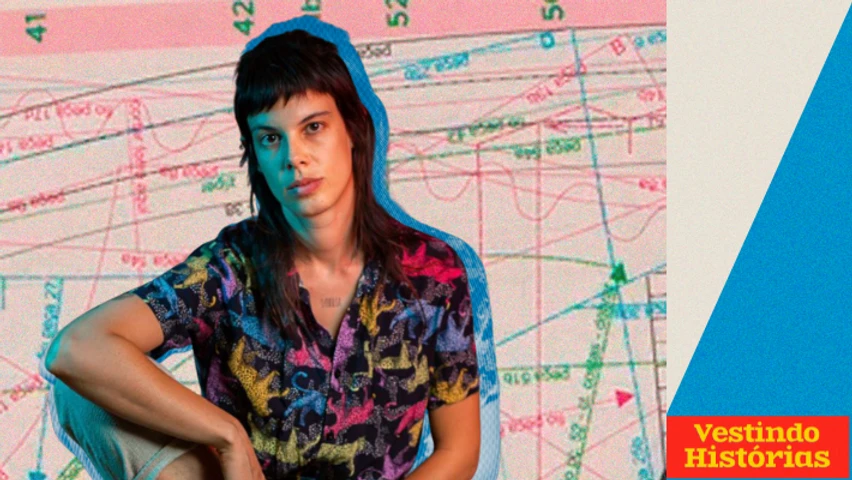
Photo by Miriane Figueira.
A native of Poços de Caldas (MG) and a graduate in Fashion with a specialization in Styling from UDESC/SC, Isbella began her professional journey creating costumes for theater and performance colleagues while still in college. But it was in Curitiba, where she established herself as a costume assistant for advertising films, that her technical repertoire began to consolidate.
The turning point came in 2014, with the feature film "Para Minha Amada Morta" (To My Beloved Dead), by Aly Muritiba. The experience in cinema lit something definitive: the certainty that costume design was her path. From then on, Isbella built a solid career in audiovisual, as costume designer and props designer for award-winning, nationally recognized projects.
Among her most notable works are:
🎬 A Mesma Parte de um Homem, by Ana Johann
🎬 Caso Evandro (Globo documentary series)
🎬 Jesus Kid, Mirador and other feature films, theater plays and fashion films
Whether in a period film, a documentary scene or a minimalist stage, Isbella turns costume into dramaturgy. For her, dressing a body means building context, identity, time and presence.
But Isbella’s path was not limited to film sets. Over the course of her career, she noticed a void, or rather, a concentration. Most technical training in costume design remained restricted to the big urban centers, inaccessible to a good part of the talent from the countryside.
With teaching experience at Centro Europeu, the Hollywood Film Academy and independent workshops, Isbella understood that her mission was broader: to bring the knowledge of costume design to where it almost never arrives, as art, as craft and as language.
Thus was born the Vestindo Histórias (Dressing Stories) project, a training caravan that travels across Paraná with in-person workshops, distributing costume-maker kits, activating local talent and proposing living encounters with the creation of original costumes.
“To dress is to tell. To dress is to remember. To dress is to resist,” says the project’s manifesto. And that is exactly what Isbella does: she creates costumes that give body to the memory, the politics and the subjectivity of those who wear them. More than teaching how to sew, she teaches how to perceive the world with more care and expression.
Isbella leads the workshops as someone who shares: she is with you, she is inside, she is close by. Her presence inspires not by imposing paths, but by creating spaces where each person can experiment, make mistakes, create and express themselves freely.
She sews alongside, observes in silence, asks questions that awaken. Instead of teaching in the traditional sense, she proposes experiences that activate the sensitivity and authorship of those taking part. There is method, but above all there is trust in the process and in listening.
Each meeting is built collectively — and what emerges from it is not just learning, but a network of exchange, recognition and affection. That is how making with one’s hands becomes belonging. And that is how Isbella dresses stories, together with those who also discover themselves as authors.
Each city the workshop passes through is treated as a setting, but also as a character. Local culture enters the costume, people’s stories enter the creation, and the final result is always more than technical: it is emotional, political, symbolic.
The project connects deeply with the notion of territory: decentralizing, circulating, activating networks, building bridges. For Isbella, Paraná is a map, but also material. And people are the raw material of collective creation.
Asked about the future of the project, Isbella usually says she wants to keep sewing possible futures: expanding the number of cities served, deepening the continuous training of participants, creating a network of emerging costume designers who exchange, collaborate and create with autonomy.
“My profession is dressing stories” is not just a title. It is a way of being in the world. And, by dressing the stories of so many other people, Isbella writes her own with firmness, delicacy and a radical commitment to art as a right.