Places of Memory – sites to recover the memory and stories of the Contestado
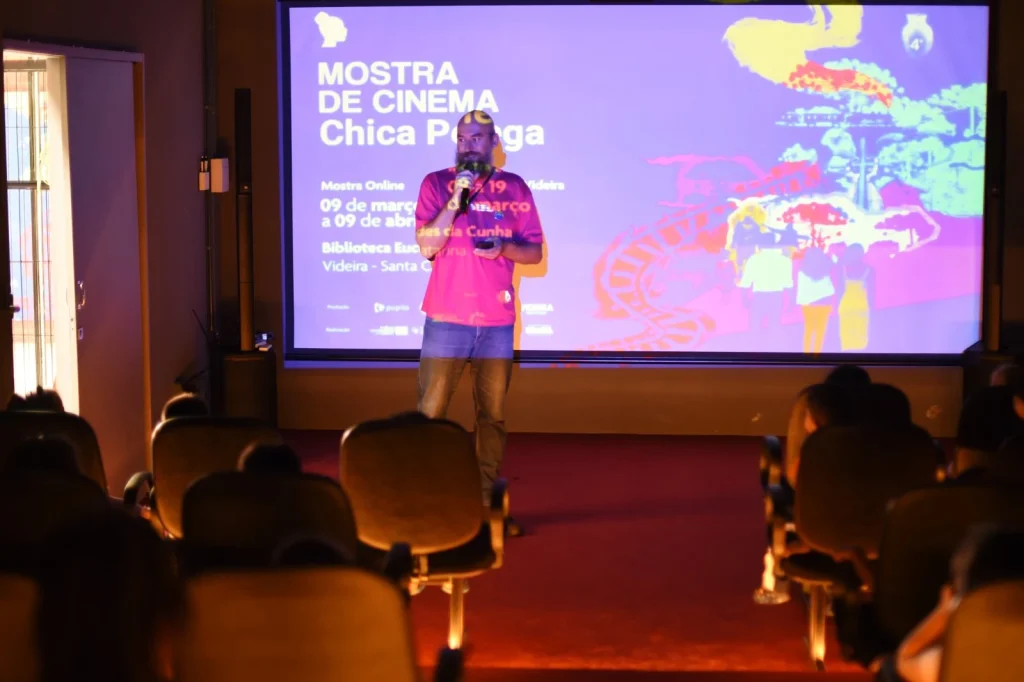
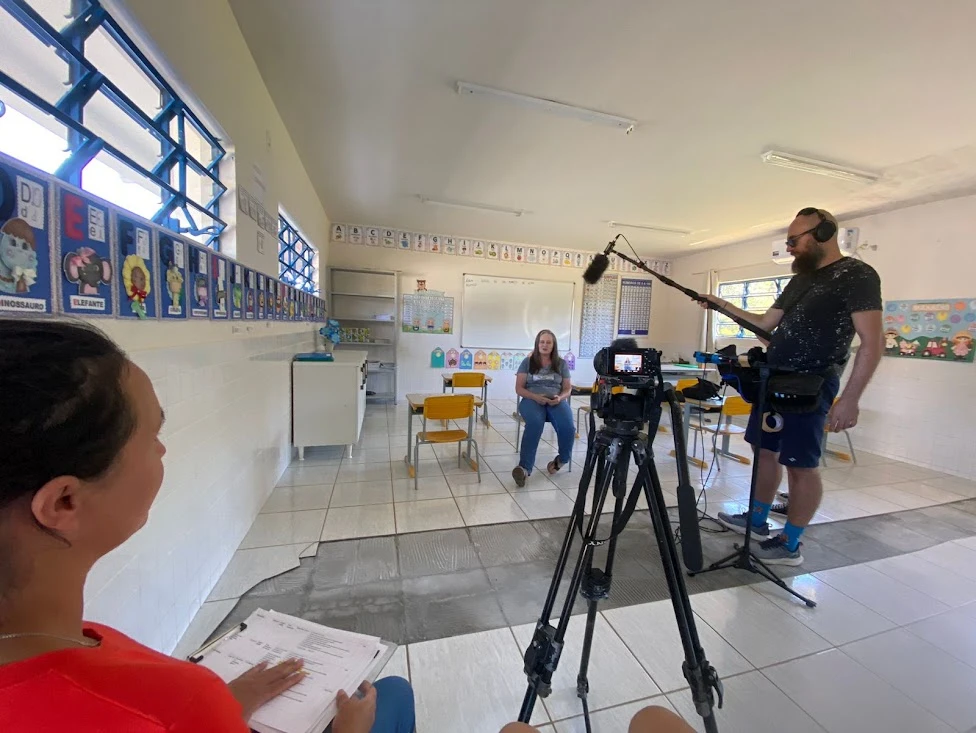
The more access we have to stories and memories about the Contestado War – or Conflict – the closer we seem to get to our true identity. From research, folk songs and classroom experiences, we discovered that there are many people who, like us, who are preparing the 2nd Chica Pelega Festival, are really interested in having this clarified.
There are places that can be visited, so that we may perhaps conceive a material record of what happened. They are valleys, waterfalls, roads, fields. There is a lot of memory kept in museums, archaeological sites, monuments, documents, photos, even tools used by the farmers of the time, weapons, and the train, of course. The old railway network is no longer the same; only a few stretches remain where one can still take rides – no longer journeys. We highlight part of this heritage that is available and often goes unnoticed; it ends up being part of the scenery of the towns and we don’t even realize that it was once part of such a gigantic conflict. If you know other places, other people, have other memories, leave the tip in the comments! Let’s expand this knowledge and rebuild this history together.
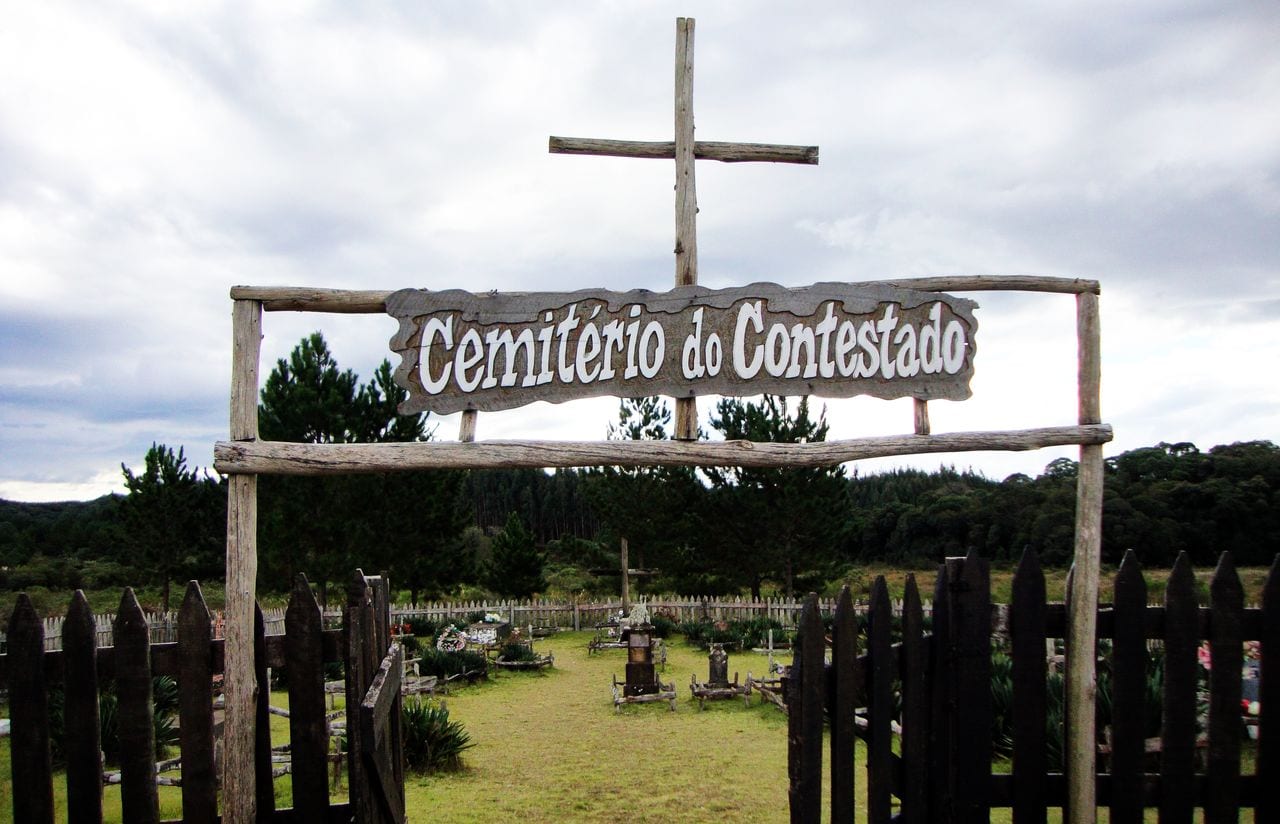
Source: Tourism Portal of the Municipality of Irani
IRANI
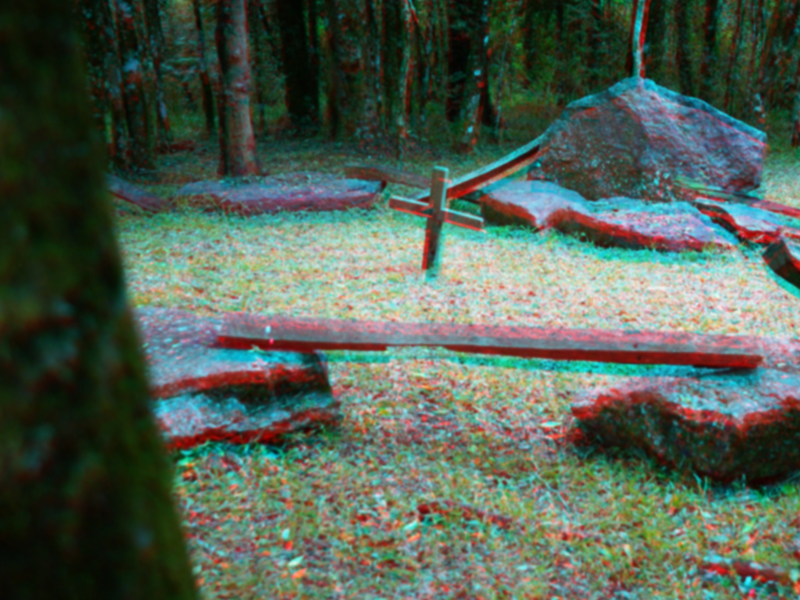
The Battle of Irani was the first battle of the National Army, the security forces of Paraná and Santa Catarina, hired gunmen and local guides, against the caboclos. In the place where the conflict took place, today the Historical and Archaeological Site of the Contestado is preserved. There is also the Grave of the Monk José Maria, killed in combat; the Contestado Cemetery, the Monge José Maria Historical Museum, as well as the Contestado Monument. This memory is kept by the Memória Viva do Contestado Cultural Foundation of the Irani Region. There are also tourist attractions such as ecological trails, Cerro Agudo, and the Contestado Waterfall, with a 41-meter drop. To visit the Site and its attractions, prior booking is required, by phone at +55 (49) 3432-3200.
Location:
BR-153, km 64 – Banhado Grande, Irani – SC
Google Maps
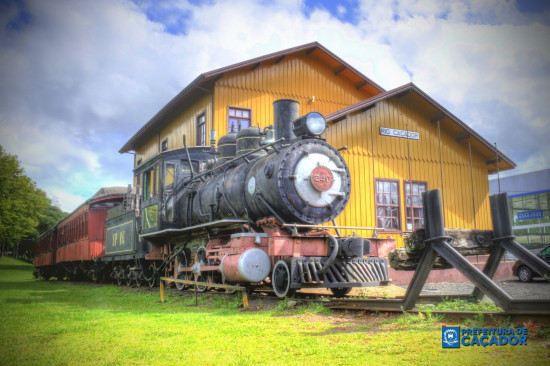
Source: Tourism Portal of the Municipality of Caçador
Caçador is another municipality that should be visited by those interested in what happened in these lands that were disputed / contested by the states of Santa Catarina and Paraná between 1912 and 1916. The Railway Station of that time has been preserved there, today the Railway Museum, where you can see a steam locomotive with two carriages, as well as the Historical and Anthropological Museum of the Contestado Region, with the largest collection in the State on this subject. Documents, photographs and maps of the time, war materials and Indigenous artifacts – Xokleng, Kaingang. The Museum is open to the public, with free admission. Tuesday to Friday, it is open from 8:30 am to 12 pm and from 1:30 pm to 6 pm. On Saturdays and Sundays from 1 pm to 6 pm. It is located at Rua Getúlio Vargas, 100 – Centro. The contact phone is +55 (49) 3567-1582
CAÇADOR
Location
R. Getúlio Vargas, 100 – Centro, Caçador – SC
Google Maps
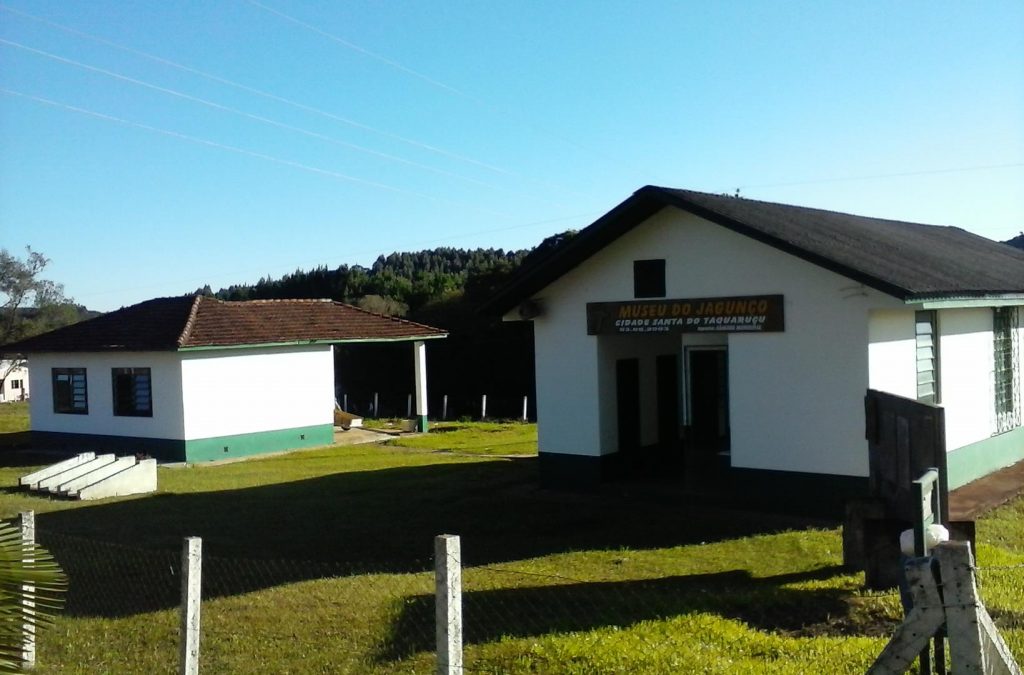
Source: Tourism Portal of the Municipality of Fraiburgo
FRAIBURGO
The first grouping of messianic believers, “fanatics”, as official History calls them, was the Taquarussu do Bonsucesso Stronghold, which was located in the old Curitibanos. Today these lands lie within the limits of the municipality of Fraiburgo. We prefer to refer to these men and women by calling them caboclos and caboclas. They were rural workers threatened by hired gunmen, who would be expelled from the lands where they lived, planted and harvested their subsistence because they had no paper granting them ownership of where they were. That was the main reason for their rebellion.
At the Jagunço Museum of the Holy City of Taquaruçu, located at Linha Taquaruçu de Cima, you will find utensils, letters and photos that are records of the memory of our region, our people, the building of this state. It is open to visitors, free of charge, Tuesday to Friday, from 9 am to 12 pm, and from 1:30 pm to 6 pm. On Saturdays, from 9 am to 12 pm and from 1 pm to 5 pm, and on Sundays from 2 pm to 5 pm. Contact by phone at +55 (49) 3256-3000.
Location
Linha Taquaruçu de Cima, Taquaruçú, Fraiburgo – SC
Google Maps
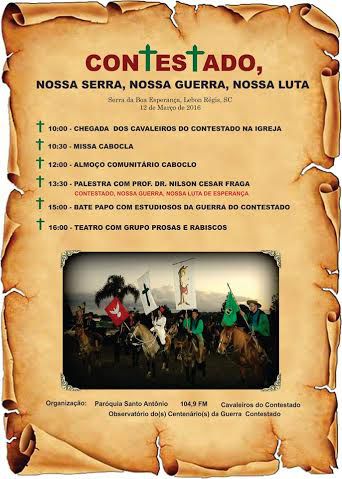
Source: ACRACOM – Santa Catarina Association of Community Radios
LEBON RÉGIS
Under Law No. 17,466, signed by Governor Raimundo Colombo in 2012, Lebon Régis came to be recognized as the “Heart City of the Contestado“. In this place there were crematoria where the remains of the victims of the Contestado War were hidden. According to accounts by geographer and professor at the State University of Londrina (UEL), Nilson Fraga, the bodies of caboclos and soldiers were burned in clay ovens, with fires of araucaria branches and pine knots. The victims were thrown into holes dug in the dirt floor with rammed-earth and stone walls of roughly one meter. In 2000, at least twelve extermination ovens were recorded on private properties without proper conservation and maintenance. This was in the community of Perdizes, in rural Lebon Régis.
Perdizinhas Corpse Crematorium
Serra da Boa Esperança – Lebon Régis
Location:
Estr. Lebon – Lebon Régis, SC
Google Maps
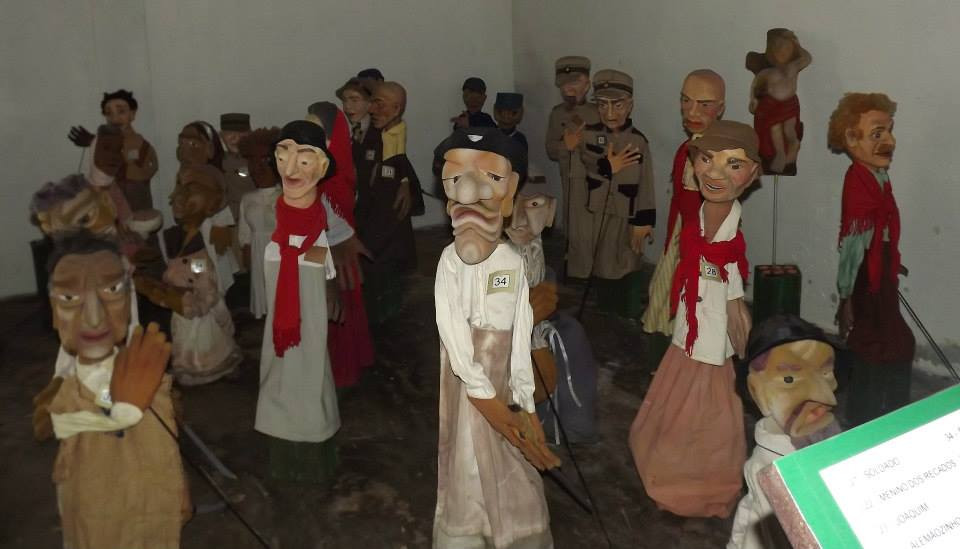
Image – Tourism Portal of the Municipality of Timbó Grande
TIMBÓ GRANDE
In that period, the place was also known as the Valley of Deaths. Today, cultural recovery happens through the Festa Cabocla, in Cachoeira, promoted by the CMEB Nossa Senhora Aparecida Municipal School since 2007. At this event, caboclo objects are exhibited; the Country Music Festival (FEMUCA) also takes place, along with typical food and a Caboclo Mass.
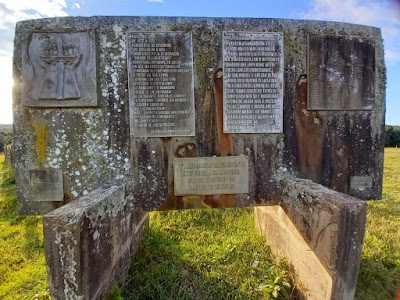
Timbó Grande located the Contestado Historical Landmark, erecting a plaque, 100 years later (2015), in honor of Adeodato, the caboclo leader who died in combat at the end of the war.
Location:
Rodovia SC340, Estrada Vaca Branca, S/N – Linha VB1, Timbó Grande – SC
Google Maps
.