How caboclo resistance reacted to the attacks in the contested lands
Contestado War: interview with Jilson Souza
In this article you will learn more about the territorial dispute in a region between Paraná and Santa Catarina whose effects still reverberate today.
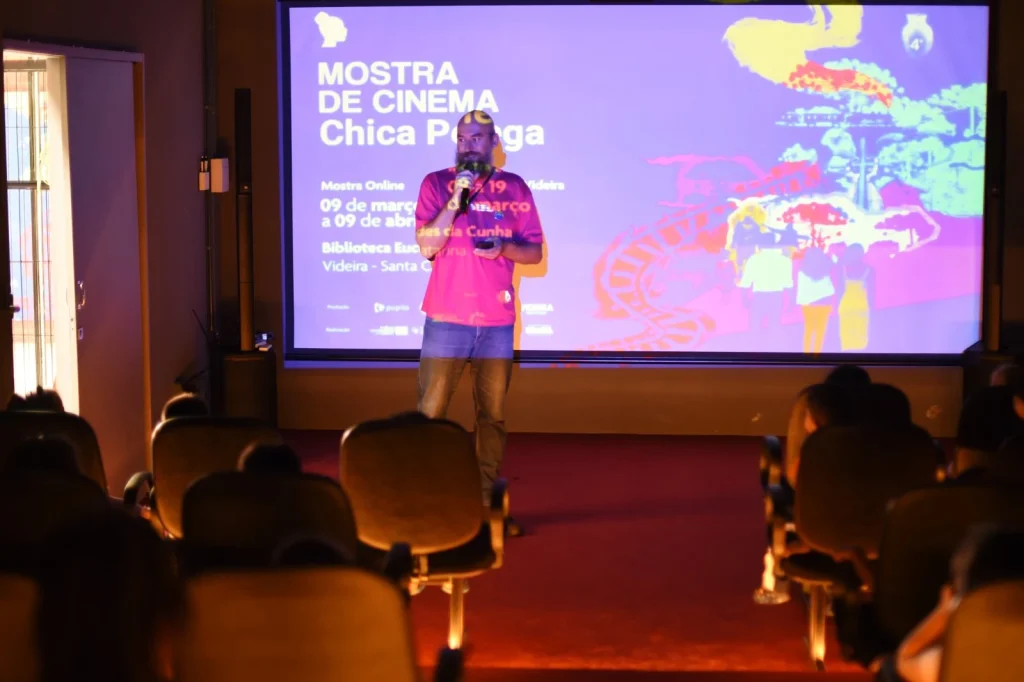
After the 1st Chica Pelega Caboclo Journey, we were left with many nagging questions. A long time has passed since we learned about the Contestado War at school, and even though we had a vague idea that we knew very little about it, we had no notion of how much this is missing for us to understand other aspects of the region where we live and the condition it is still in today.
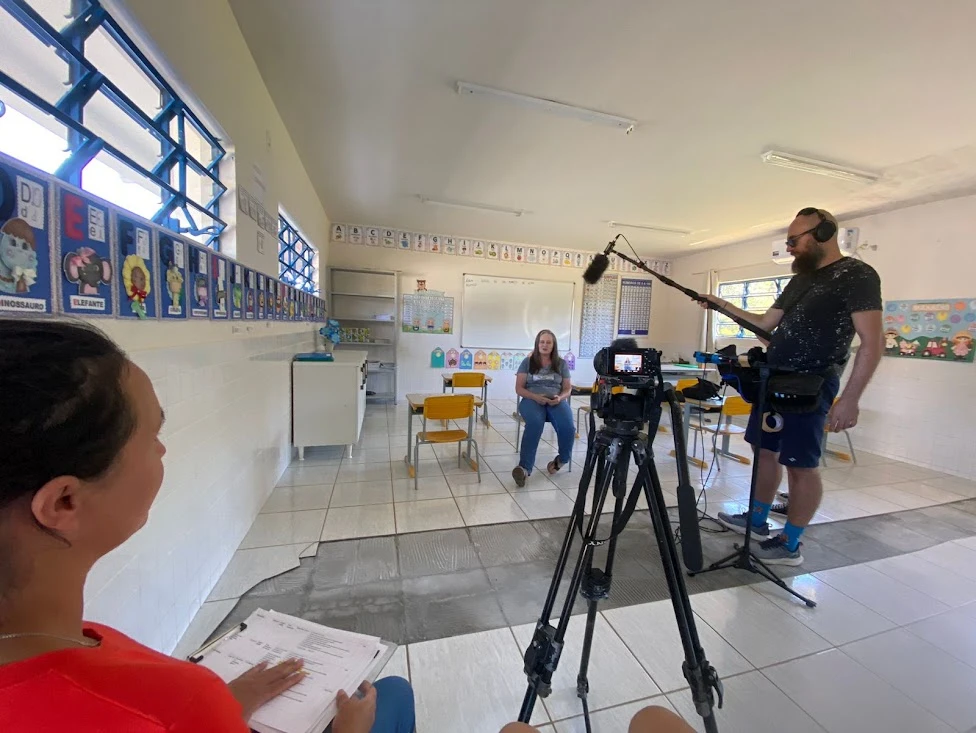
With this in mind, we spoke with popular educator Jilson Souza, member of the Regional Forum in Defense of the Caboclo Civilization and Culture of the Contestado and one of the organizers of that event. He begins by questioning the use of the word war:
“First, the concept of war: it was not a war, it was a genocide. We cannot call it the ‘Contestado War’. We should and must call it the Contestado Conflict or the Contestado Movement.”
Jilson places us in the time when it all happened. “We are talking about the end of the monarchy and the beginning of the republic in Brazil. In the South, in particular, a movement known as independent colonato was taking place. That is, after the liberation of enslaved Black people, part of the European immigrants who were beginning to arrive in the Southern states started working on the large estates as tenants, exploited by the landowner. These first waves of European immigrants, in the late 1890s, 1900s and 1910s, ended up producing a policy of whitening the interior of SC.”

DISPUTE FOR LAND
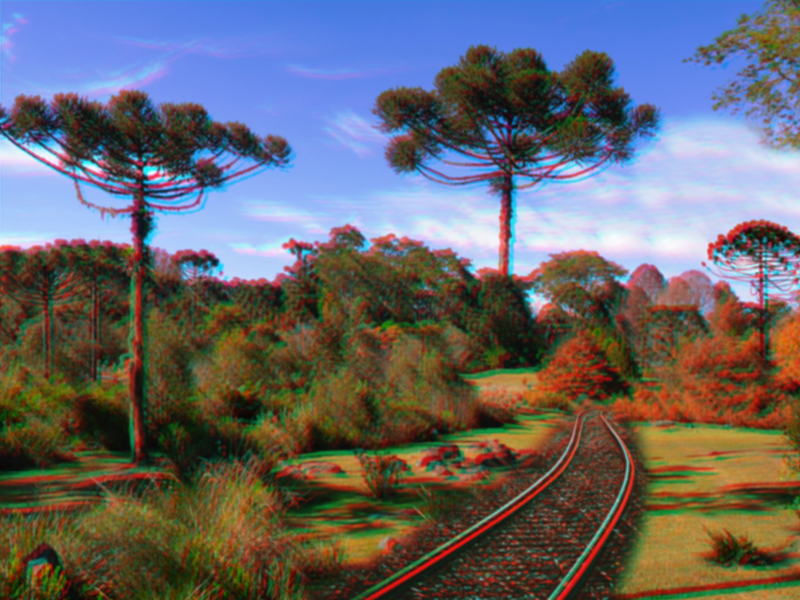
There was a movement around three monks: João Maria de Agostinho, João Maria de Jesus and José Maria. At the time, few priests traveled through the interior. José Maria became known as the Warrior Monk, because he joined the desplazados (a Spanish term denoting those who were torn from their place of origin), those who were removed from the land by the Brazil Railway Company, which at the time was building the São Paulo – Rio Grande do Sul Railway, cutting through the interior of Santa Catarina.
Among the companies belonging to the group was Lumber (etymologically, lumber means felled timber). The people who followed the monk then began to form the first resistance grouping, or holy city, as they would be called, in Taquarussu do Bonsucesso. This is the political and social context that would give rise to the Contestado Conflict.
The central reason for the conflict was the dispute for land. In exchange for building the Railway, the Brazilian government and the government of the state of SC gave Brazil Railway and its owner, Percival Farquhar, the right to exploit whatever he wanted within a 15 km strip to the right and left of the railway. Percival also built the Madeira-Mamoré railway, in the North of the country (where the state of Rondônia is today). Within this 30 km strip, everything was allowed, including killing.
Together with the power of the region’s coroné (the expression Jilson uses to define the landowners) – and there were several families in Campos Novos and Curitibanos who held political power – they supplied vaqueanos and jagunços, synonyms in this context. They would go to the caboclos and caboclas and deliver an ultimatum: “either you move away from here or we will kill you.” The vast majority of the caboclos decided to resist, and another considerable part decided to follow José Maria to the first gathering, the first holy city, which is Taquarussu do Bonsucesso.
Jilson reminds us that the relationship the caboclo and cabocla had with the land was not one of possession, but of belonging: “Their umbilical cord is buried there. The land is pachamama, it is the mother. And the invading capital that was arriving, plus the first waves of immigrants… They have possession, they have a title, a paper that says the land belongs to them.”
TAQUARUSSU DO BONSUCESSO
The first battle of the Contestado took place in the fields of Irani. However, the cradle of the conflict is Taquarussu (at that time belonging to Curitibanos), because it is there that the first gathering, the first holy city, emerged, and this began to bother the region’s coronés.
Colonel Albuquerque, for example, was uncomfortable because the gathering had risen on his lands. According to some accounts, he sent for the monk José Maria to heal his daughter. The monk did not refuse to heal the girl with his knowledge. For some, this is the ultimate reason the caboclos created the holy stronghold in Irani.
If we recall this figure of coronelismo as an element of Brazilian politics, we can observe that it occurs in the period from the monarchy until 1930, with the so-called revolution of 1930 and the creation, in 1937, of the Estado Novo. The monarchs granted this title through the “halter vote”.
The titles of colonel and captain were given to men who owned a lot of land and thus had the possibility of having their own armed militias. Therefore, by the power of land ownership and the power of arms, they received this title before the Republic.

Gualberto
BEGINNING OF THE CONFLICT
On October 22, 1912, the Brazilian Army and the Paraná Military Police launched an attack on the holy stronghold of Irani, where the first battle took place, resulting in 21 people killed. Among them, the monk José Maria and Colonel João Gualberto, leader of the Paraná troops.
José Maria’s remains are still in Irani, and João Gualberto’s lie in a sumptuous mausoleum in Curitiba. For official historiography, João Gualberto is a hero who fought fanatics and jagunços, the words by which they call the men and women of the Contestado.
According to professor Jilson, “the security forces would massacre, would carry out genocide against the caboclos in the name of private property. The media of the time reported that they were fighting a group of ignorant and dangerous fanatics who fought for a caboclo monarchy. Not the old monarchy, but a society where they could share the little they had. It was this feeling of sharing that the security forces would try to fight.
They fight the way of life, the way of organizing. In their view it was dangerous because it was based on solidarity. Some authors go so far as to say that primitive communism, or a caboclo communism, was lived in the holy strongholds. They were fighting a different way of living, one that went against private property.”

Operários (Workers) – Tarsila do Amaral
FORMATION OF THE CABOCLO PEOPLE
The caboclas and caboclos of the Contestado are formed by several social and ethnic groups. The basis of this formation is the six Indigenous nations that inhabited this ground: Araucanians, Botocudos, Kaingang, Xokleng, Guarani and Coroados. So this is the part Jilson believes to be the main one. The second part is the Black people brought in 1642 by Juan de Salazar y Espinosa, a Spaniard who later founded Asunción (Paraguay).
These Black people would later organize themselves in quilombos. If we think of the Contestado territory up to the Canoas River, in Lages there will be four quilombos: Canudinho, in Lages; Invernada dos Negros, between Abdon Batista and Campos Novos; Campo dos Poli, between Fraiburgo and Monte Carlo; and Rocio, in Palmas (PR). This is also part of what would form the men and women of the Contestado.
The third part of this formation is the whites – Spaniards, Portuguese, and later the cattle drovers. Some authors even mention the remnants of the Juliana Republic, from the Farroupilha conflict. This takes place at the end of the monarchy, the beginning of the Old Republic, between 1889 and 1890.

São João Maria
CHARACTERS
The main character of the conflict was the Caboclo Resistance itself, against all the Brazilian army’s attempts to massacre them. The building of the various holy strongholds. The emergence of Chica Pelega and the leadership of Maria Rosa. In addition to these, the caboclo leaders, both military and religious.
Maria Rosa would lead in Caraguatá. She was a religious leader, a girl who had visions of the monk and who did not shy away from going to the battlefield. Chica Pelega would join the Taquarussu do Bonsucesso Holy Stronghold after the Battle of Irani. They wanted the right to live with dignity on the land that belonged to them, they wanted the right to have something to eat.
THE CONTESTADO IS NOT OVER
The Contestado Conflict is not over, because there is economic data to indicate this. Fraiburgo has, according to 2010 data (IBGE), a population of 34,530 people, 36.8% poor. In Timbó Grande, there are 7,160 inhabitants, 41.56% poor. In Calmon, 3,387 people, 43.47% poor. Lebon Régis, 11,838 inhabitants, 38.70% poor.
These figures appear in the state with the third highest Human Development Index (HDI) in Brazil. Meanwhile, Calmon, Matos Costa, Timbó Grande, Lebon Régis and Fraiburgo have an HDI comparable to the municipalities that suffer most from the scourge of drought in the Brazilian Northeast. These were the scene of battles and where strongholds of resistance to the old war (or conflict, as Jilson prefers to call it) were established.
There is another aspect I always like to reflect on. The Contestado War is not over, because many of the descendants of the caboclos and caboclas are cheap labor developing the capital of the descendants of the coroné who once oppressed and killed their great-grandparents and great-great-grandparents.
The Holy Stronghold of Santa Maria – the last stronghold, where the last battle took place – came to have 5,532 houses and 17 churches, according to official Army data. However, we do not know how these people organized themselves in terms of food, security and coexistence, or what laws governed that coexistence.
According to Jilson, the immigrants – or their descendants – want to tell the history of our region starting from immigration, and he says it is not a matter of hiding the history of the Italians, Germans, Poles, Austrians, French and other nationalities who settled here. On the contrary, he points out that it would be fairer for official history to acknowledge that they came here because their ancestors had no way out on the old continent.
The professor concludes that when the material and immaterial heritage and memory of the Caboclo civilization and culture are not preserved, it is this example they want to erase. He laments that this is what they want to destroy, this is what they want to hide: that our region was the scene of one of the main social conflicts and land struggles there has ever been.
“As of July 2019, our region stopped being called the Contestado Valley and came to be called the Immigrants’ Valley. I am talking about one of the most terrible public policies, which is the whitening of the interior of Santa Catarina,” Jilson concludes, warning of a war that is not yet over.