2nd Chica Pelega Film Festival sharpens the gaze on the peoples of the Contestado region
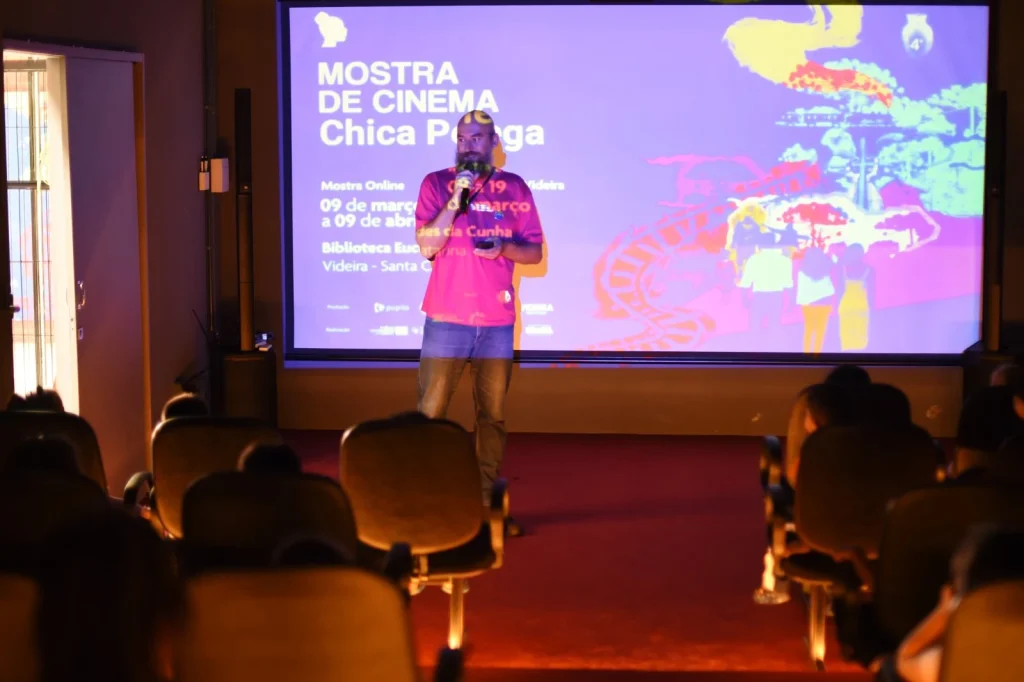
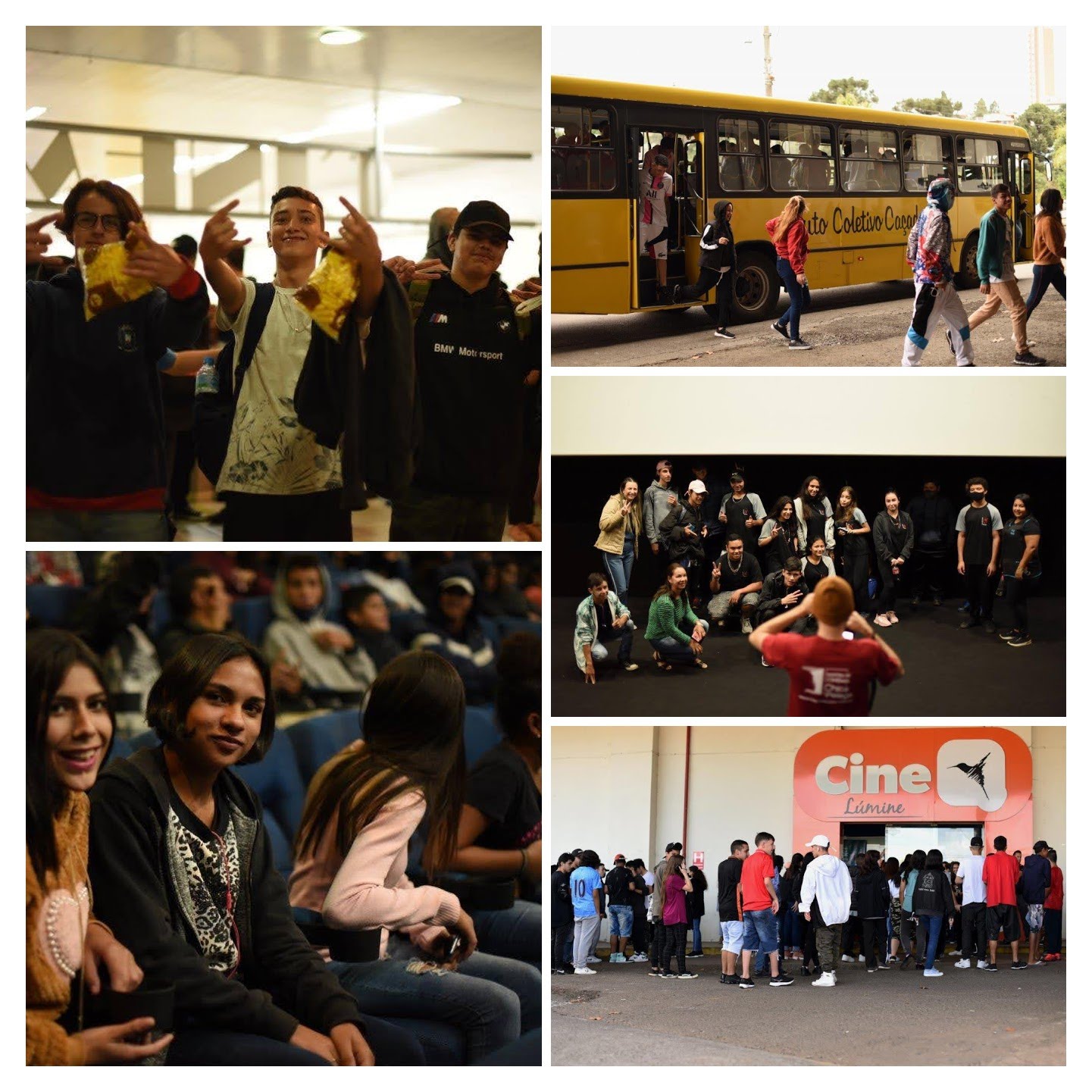
After passing through Campos Novos (11), Curitibanos (18) and Caçador (25), captivating 1,790 students from 70 classes of 26 state and municipal schools, in addition to the walk-in audience who could attend the free open evening sessions, always at Cine Lúmine, we can guarantee that the 2nd Chica Pelega Film Festival was a success. The Project is carried out by the Government of the State of Santa Catarina, through the Santa Catarina Cultural Foundation (FCC), with funds from the Federal Government and the Aldir Blanc Law, and is produced by VMS Produções and Pupilo TV of Joaçaba.
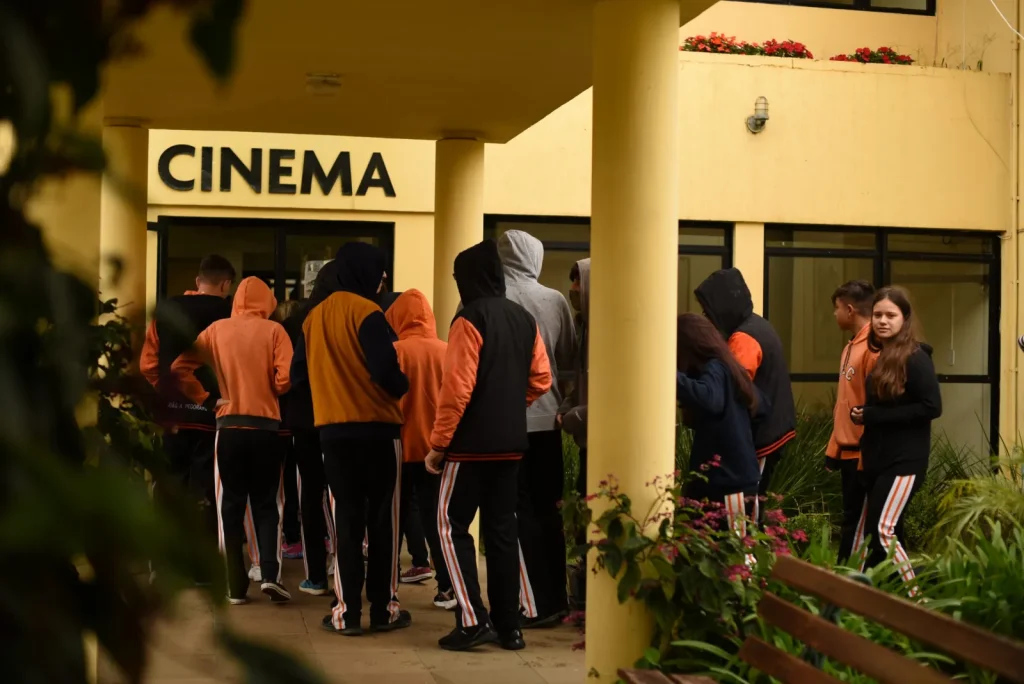
Two school sessions were offered in the morning and two in the afternoon for 8th, 9th and 3rd (high school) grade classes from public schools in the municipalities and Regional Education Offices (GERED) the Festival passed through. In this way, it was possible to unite the audiovisual experience with the educational needs of teaching about the Contestado War, the content related to the films.
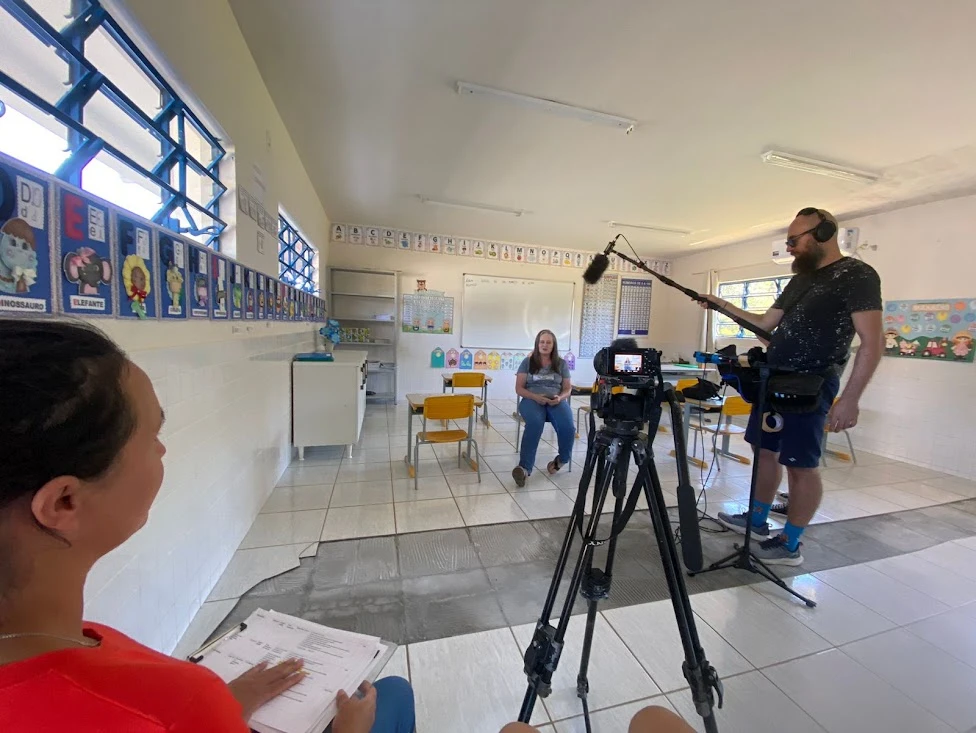
Curated by Joaçaba filmmaker Rudolfo Auffinger, the short films Irani, by Rogério Sganzerla (1983); Olhar Contestado, by Fabianne Balvedi and Fernando Severo (2015) and Larfiagem (2017), by Gabi Bresola, were screened. The first short is a handheld Super 8 record of a civic parade in honor of the Contestado War, in which the filmmaker films the horses up close and the speech of folklorist Vicente Telles about that conflict, whose initial battle took place in that municipality. Fabianne Balvedi’s film recovers the photos of photographer Claro Gustavo Jansson, the professional hired by the Lumber company to portray the War. She creates animation using free software and thus changes the perception of the caboclo. And finally, Larfiagem is the name of the slang created in Herval d’Oeste, forty years after the war, by boys who worked at the railway station, and the story is told by its creators, now 60 or 70 years old.
In addition to these, in the evening, the feature film Terra Cabocla (2015), by Márcia Paraíso and Ralf Tambke, was screened in the session open to the public. The documentary was shot in Fraiburgo and Lebon Régis, and shows the caboclo faith of the joaninas and joaninos, the devotees of São João Maria. They live the remnants of the Contestado, remember the massacre and the souls lost in the war; the struggles that still stand: for land, for dignity, for life.
During the debates, while gratitude was expressed for bringing to the surface such an important and latent subject, which is perceiving oneself as caboclos and caboclas, understanding one’s popular way of speaking, history beyond official historiography, and thinking about who carries out this recovery and how it is proposed, a group of artists who work on the outskirts of Caçador spoke about their struggle to gain visibility. They described how easy it is for white descendants of Europeans to hold this debate, to the detriment of Black people, the poor and caboclos, for whom these spaces remain hidden, even with all the resources made available for it. It was a conversation rich in elements and a debate to be extended to other spaces of action.
There have already been invitations from other municipalities for a Third edition of the Chica Pelega Film Festival to travel other routes within the region where the Contestado War took place. Other interested parties can contact the production team through this link https://chicapelega.com.br/circuito/nova-cidade/