Olhar Contestado: Interview with director Fabianne Balvedi
Olhar Contestado is a documentary about an episode that took place almost 15 years after the end of the Canudos War. With similar proportions and meanings, the Contestado War broke out in a region of southern Brazil whose possession was disputed by the states of Paraná and Santa Catarina. Over a stretch of land equivalent to the State of Alagoas (25,000 km²), for more than four years, between 1912 and 1916, a population estimated at twenty thousand backlanders faced the forces of the government and of the coronelismo that prevailed in the region, in a conflict that came to involve 80% of the Brazilian Army. At the end of the conflict, Paraná and Santa Catarina signed an agreement definitively establishing their borders. And it was at the height of these struggles that, for the first time in Brazil’s history, the peasant masses showed a clear awareness of the need to secure their “right to land”.
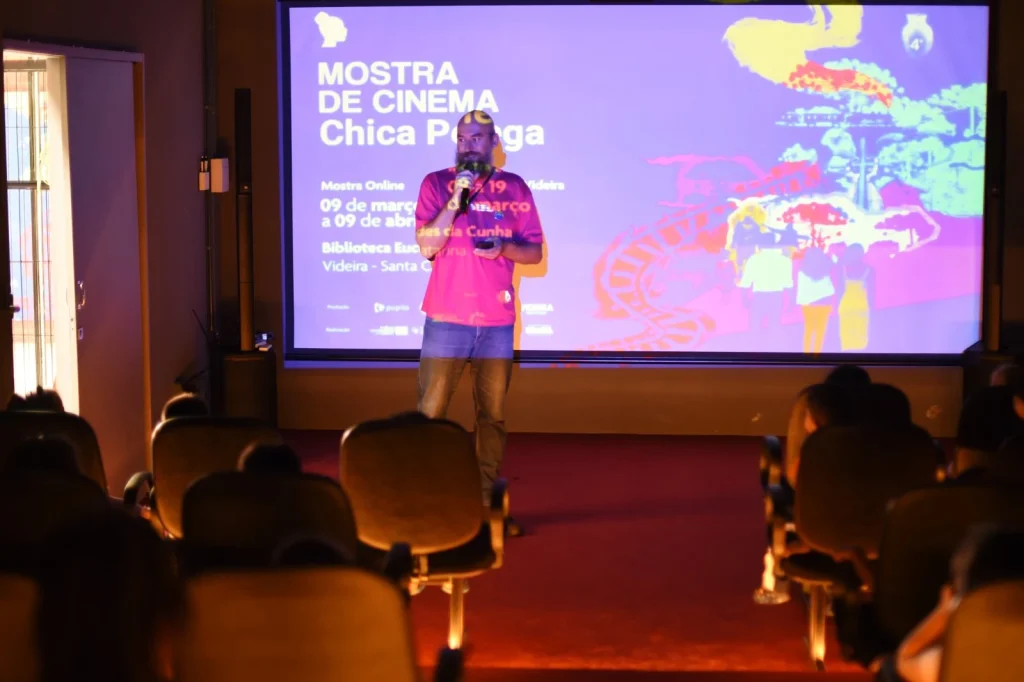
Fabianne Balvedi points her “contested gaze” by directing a 15-minute documentary that is part of the 2nd Chica Pelega Film Festival. Follow this conversation and curiosities about what the film presents, how it was produced, the techniques used and more:
When did you get the idea of talking about the Contestado?
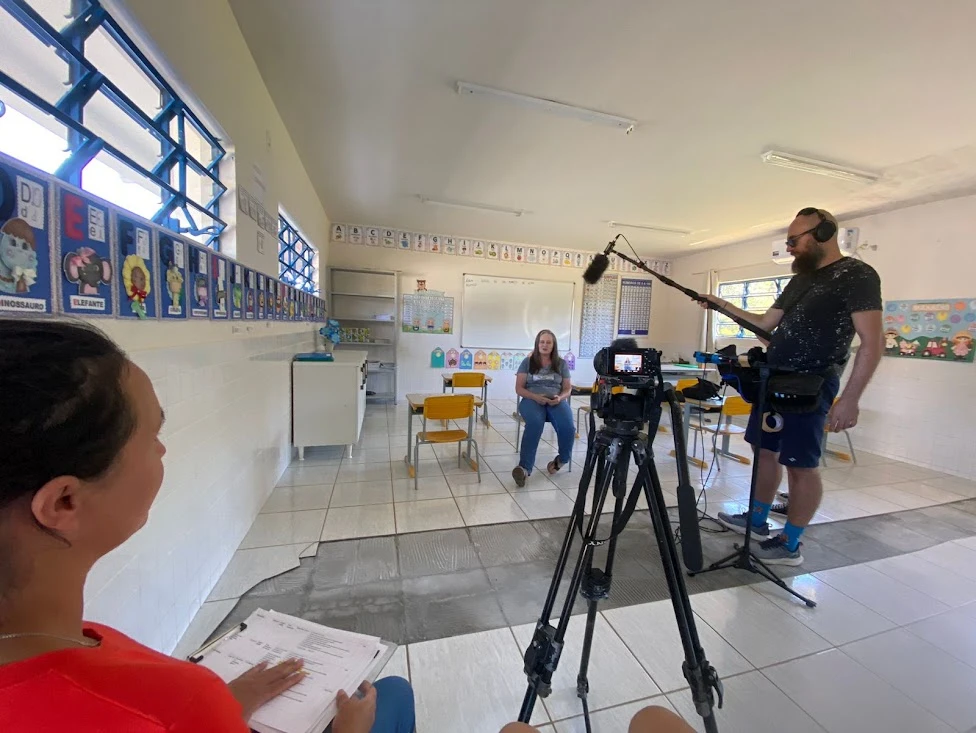
Despite being from the region, like most of us, I only started hearing more about the Contestado War after leaving school. I was invited by Fernando Severo, who is from Caçador, to take part in a film project he intended to submit to an Incentive Law. I accepted. I was the producer and ended up also being the director because he thought it fair that the direction should be mine. The script and editing were his. But the idea of making a film about the Contestado was Fernando’s. Together with the whole crew listed in the credits, we made Olhar Contestado.
How did you get access to Claro Jansson’s photos?
I had access to these photos through Paulo Moretti, who is his grandson. Professor Nilson Cesar Fraga introduced me to him. I got to professor Nilson through the research of Luciane Stocco and Thiago Benites, who were the two researchers on our film.
What does it mean that the film was edited using free software?
It means it is a film that managed to be made with free tools. This shows that it is possible to work professionally with free software. It is like a certificate of the tool’s functionality. It shows that it is not inferior to any other tool on the market. There is a prejudice that free software does not work. Even the Android operating system, through which we communicate, is free software. Besides using free software, the film itself is free.
Is there a notion of reality or fiction that can be manipulated?
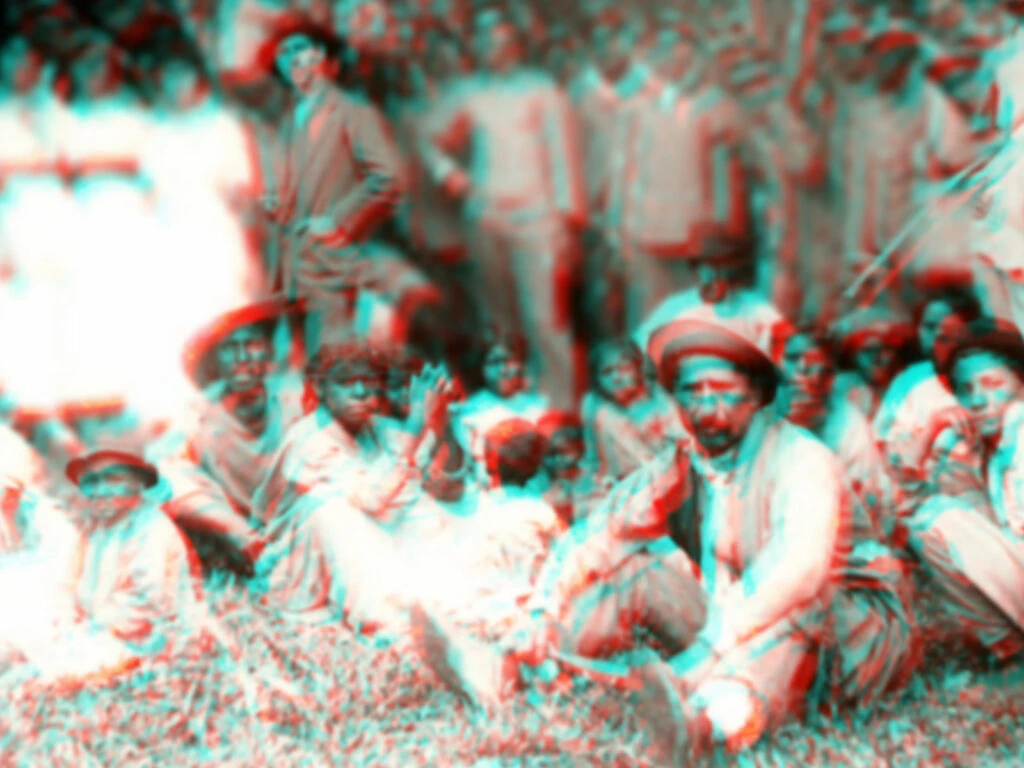
Actually, the thesis of professor Rafael, who is also in the interviews, in the film’s cast, is that the photos were posed to convey something that was not happening. That the war was fair to the losing side and that the losing side was being well treated, when it was not well treated; many people were killed and afterwards they did not know what to do with so many prisoners. There were a lot of people to feed. And it is in these terms that this genocide is said to have happened, at the end of the war. At the time, too, you could not take an instant photo. The person had to stand still in front of the camera. So there are several reasons why the photos were taken the way they were. But, symbolically, you can see that the caboclos were in an inferior position and the Army behind, standing. I don’t even know if it was conscious. But you can perceive this in the photos, through the postures.
What does it mean to you to have your film included in a Film Festival that aims to present the Contestado to public school students in the region where the conflict took place?
For me, it is the consolidation of the film’s purpose. It is the beginning of a journey that I want to last as long as it can. I don’t know how long a film lives. I don’t know if we can say that a film died at some point, I don’t know what the life of a film means. But I think we can say that the film got on the track it was supposed to follow. It is important for it to become known so it can be used in schools. My goal, at least, was that. It was for the story to become known through this lens of the contested gaze.
To learn more about Fabianne Balvedi’s work, you can check her mini-bio right here on the 2nd Chica Pelega Film Festival website. And to watch the trailer for this and the other films in this festival, and access the credits and other information, visit the Films page, right here.