Cineclube Pupilo at the 2nd Ó Lhó Lhó Festival
Cinema, dialogue and resistance as a network
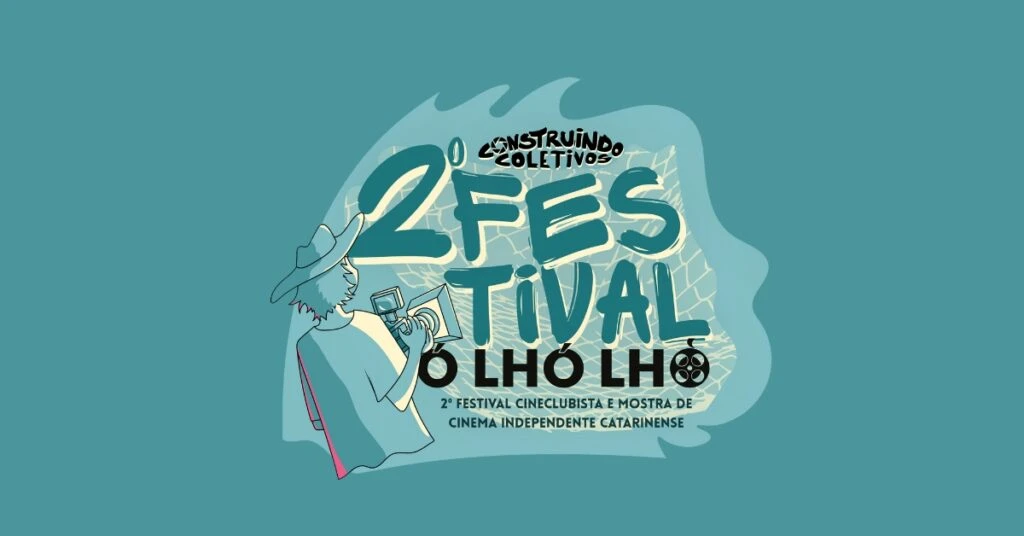
Cineclube Pupilo took an active part in the 2nd Ó Lhó Lhó Festival — a Film-Club Festival and Showcase of Independent Santa Catarina Cinema — with film screenings and in the conversation circles that put on the table the challenges and strengths of film-club practice and community culture in the state of Santa Catarina.
Sensory screenings: affections and territories
On Thursday, the audience watched the short Terra, Vento e Água, a poetic work connecting elements of nature to human experiences, offering a sensory and contemplative immersion. On Friday, Do Peito da Pele was screened, exploring the body and memory as fields of expression and affection. Both sessions sparked reflections and broadened the dialogue between those who make and those who watch cinema as a collective practice.
Film clubs: a space for training and transformation
Saturday’s conversation circles reinforced the importance of film clubs as territories of coexistence, critique and mobilization. The role of these spaces in breaking with the passive logic of audiovisual consumption was highlighted. By fostering debate and reflection, film clubs become tools of political and cultural education, where the audience is an active agent.
Despite the fragmentation and precariousness that run through the cultural scene, the film-club movement stays alive in the strength of the collectives and communities that sustain it. The pursuit is for a practice that is not about the community, but with it — promoting listening, exchange and belonging.
Cultura Viva: public policy as a social movement
One of the most powerful circles addressed Cultura Viva as public policy and as a practice of resistance. Emerging as a government program in the early 2000s, and later institutionalized as State policy, Cultura Viva proposes a new way of thinking about cultural funding: from the communities, for the communities.
The difference was discussed between initiatives like Cultura Viva, born from the articulation between civil society and public authorities, and other more recent ones of an institutional, top-down nature, such as cultural squares planned without involvement of the community base.
Cultura viva proposes another logic: it supports collectives, non-profit groups and cultural agents who work at the edges, in vulnerable territories, in the peripheries. These are the so-called Pontos de Cultura, spaces of living culture born from local practice that build public policies from lived experience and not only from management.
Copyright, cultural rights and access to the audiovisual
On Sunday, the conversation circle dove into the challenges and tensions surrounding copyright and cultural rights in Brazil. It was stressed that the history of copyright is marked by disputes and that, often, this right serves the interests of the cultural industry more than authors and small producers.
In contrast, cultural rights involve not only production, but also the access, preservation and transmission of cultural heritage. They guarantee everyone’s right to take part in local, national and — with the internet — even global cultural life. These rights are constitutionally supported but lack clear regulation.
Santa Catarina film-club manifesto: collective building and living resistance
Closing the festival, an important collective process began: the construction of the Manifesto of Santa Catarina Film Clubs. This document is born from the listening and lived experience accumulated across the conversation circles, the screenings and the coexistence among different collectives in the state.
The manifesto expresses the urgency of public policies built with and for communities, the need for real access to the audiovisual as a formative and transformative tool, and the strength of film clubs as living spaces of cultural resistance.
Grounded in the utopia of the possible, the manifesto is a call to collective action. It reaffirms that making culture is a right, not a favor — and that living culture resists because it flourishes where least expected, rooted in affection, in encounters and in the power to imagine and build other worlds.
Closing and Collective Gratitude
Taking part in the 2nd Ó Lhó Lhó Festival was a powerful experience of exchange, listening and joint building. We are deeply grateful for the opportunity to share knowledge, experiences and challenges alongside so many cultural agents committed to a culture made with and for communities. We move forward strengthened, certain that the Santa Catarina film-club network is alive, creative and resilient — and that gatherings like this are essential to keep the flame of collective transformation through the audiovisual burning.