The 1st Mostra Fita de Cinema fulfills its purpose
The first edition of the Mostra Fita de Cinema — The Music in Rogério Sganzerla’s Reels — held in his hometown of Joaçaba, successfully celebrated the work of the Santa Catarina filmmaker who became one of the greatest names in Brazilian Cinema Marginal.
The event, held throughout May in a hybrid format, brought together leading Sganzerla scholars, friends such as Antônio Carlos Pereira (“Bolinha”) and his brother Albino Sganzerla Filho (“Albininho”), as well as community members, students and communication professionals.
The festival was curated by journalist and scholar Cristina De Marco, who used music as the main element — Sganzerla’s entire connection with samba and with Brazilian Popular Music. “Sganzerla is a Joaçaba native recognized by film lovers around the world, honored here and abroad. His connection with music and with artists was immense,” she highlighted. Over four days, emblematic films were screened, such as the feature Tudo é Brasil (1998), the shorts Brasil (1981) and Informação H.J. Koellreutter (2003), and the medium-length Isto é Noel Rosa (1990).
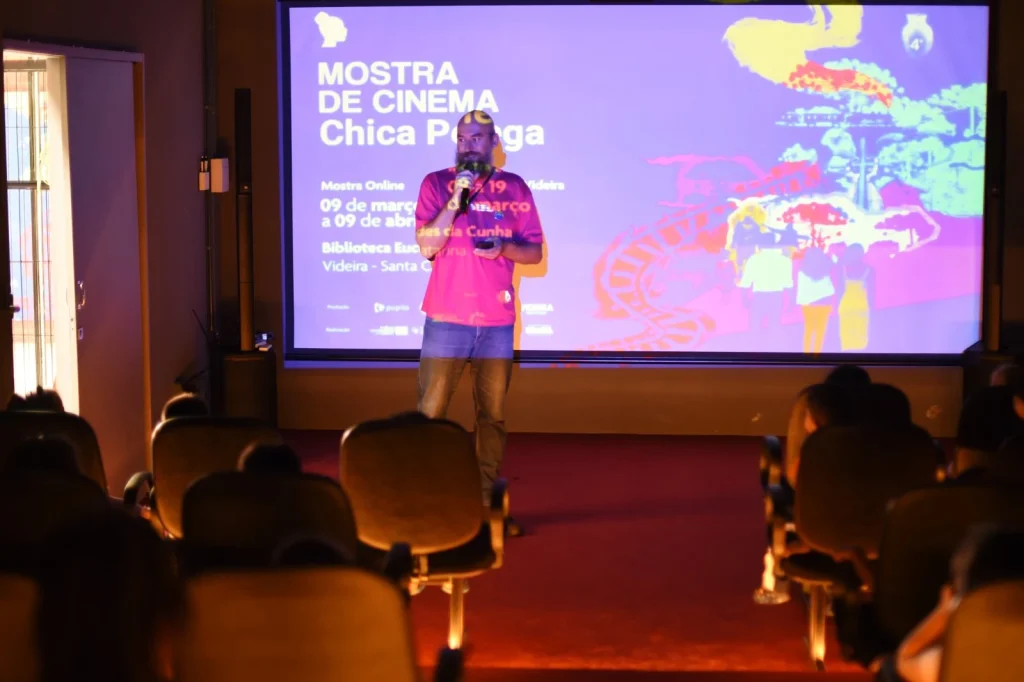
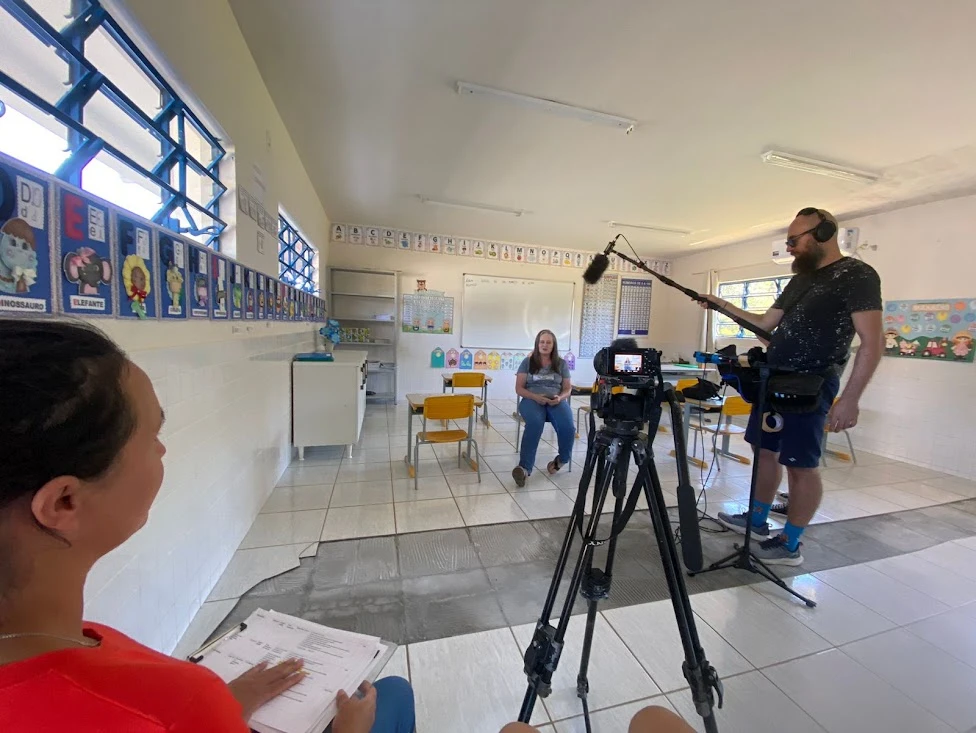
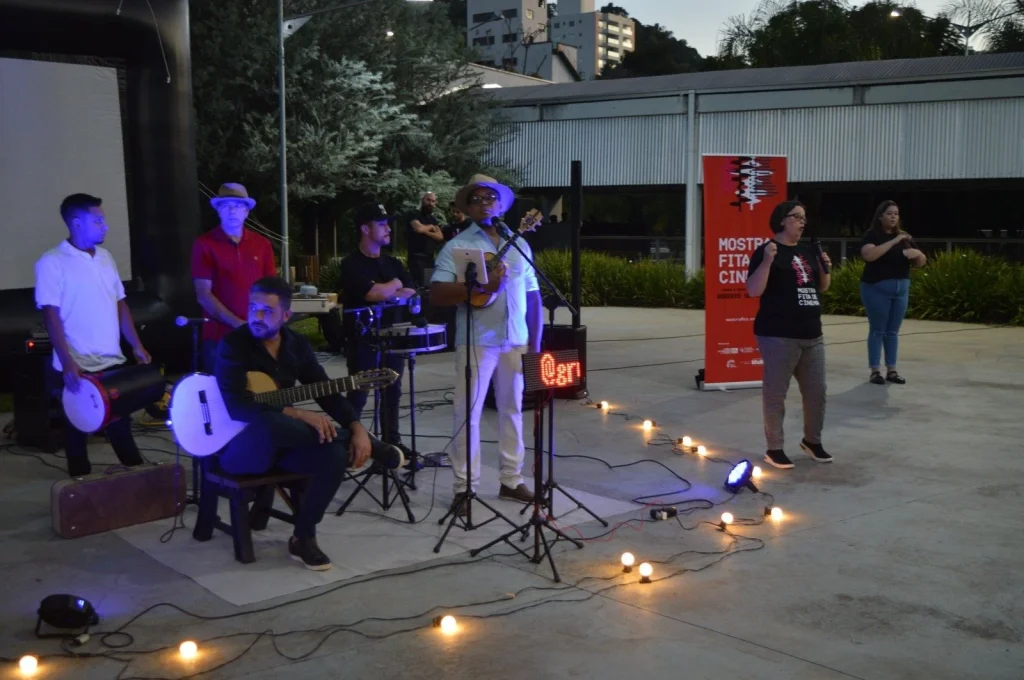
The festival opened with a screening at the Orestes Bonato Municipal Park, continued with School Sessions in Joaçaba, Herval d’Oeste and Luzerna — aimed at high school students — and three nights of screenings at the Teatro Alfredo Sigwalt, complemented by debates about the filmmaker’s technique and irreverent style. “He used to put on theater here at home and charge admission. The ticket was a tree leaf, but it had a whole meaning. We all knew he was going to be an artist,” said his brother Albino.
The Mostra Fita de Cinema was approved by the Prêmio Catarinense de Cinema — special Lei Paulo Gustavo/2023 edition — and strengthens the relationship between cinema, music and community, building bridges between past and present.
Legacy: content and learning
Beyond promoting his work and the educational program with students, the festival provided learning through four free workshops (three online and one in person). Joel Guindani and André Bersaghi presented “Cinematographic Aesthetics”; curator Cristina de Marco dove into Rogério Sganzerla’s universe; Clélia Mello and Eduardo Gonçalves Dias introduced the art of film criticism; and Luiz Felipe Soares led the workshop “Soundtrack for Cinema.”